Mon–Sat: 8:00 AM – 10:00 PM (GMT) Certified Quran Teachers Worldwide

How to Pray Namaz Step by Step (Salah Guide for Beginners)

Salah, or Namaz, is one of the five pillars of Islam and the most significant act of worship after the declaration of faith. It is a direct link from a Muslim to Allah, and he has an opportunity five times a day to seek his guidance, forgiveness, and peace. Salah is an integral part of a Muslim’s life and is obligatory on every adult Muslim.

Today, many Muslims prefer to learn salah from a professional online Quran academy where qualified teachers guide them step by step about prayer, reciting the Quran, and Islamic etiquette. Personalized online Quran classes help children, adults, and new Muslims to learn the right way of performing Salah confidently.

How To Pray Namaz?

Conditions for prayer of Salah

There are several conditions to be met before making up Salah. These conditions make the prayer valid (lawful) as per Islamic guidelines. Proper preparation also leads the believer to enter prayer with a clean heart, mind, and respect.

1. Perform Wudu (Ablution)

A Muslim has to be in a state of purity before performing Salah. The washing of specified parts of the body (hands, mouth, nose, face, arms, wiping the head, and washing both feet) is performed during wudu.
Any action or incident that removes the wudu will necessitate a new wudu before performing Salah. Examples of this include using the bathroom, falling asleep, or passing wind.

2. Wear Clean Clothing

The clothing used for Salah should be clean with no impurities. Islam promotes both cleanliness of the body and the spirit. Clean clothes show respect for the act of prayer and help to get the right attitude for prayer. Make sure that the body is clean. Clothing needs to be clean, as does the body. Islam has laid great stress on cleanliness, so it is vital to maintain personal cleanliness as part of Islam’s worship.

3. Pray in a Clean Place

The area for performing Salah should also be clean. Muslims can pray inside a house, mosque, workplace, school, or other suitable place provided that there is no impurity in the place and there is space for prayer.

4. Face the Qiblah

Muslims face the direction of the Ka’bah in Makkah during the prayer. This direction is called the Qiblah and represents the unity of Muslims throughout the world in prostration of Allah.

5. Cover the Awrah

Modesty of dress is required during Salat (Salah) in Islam. For men, the minimum area that must be covered is from the navel to the knees, although wearing clothing that covers the shoulders is recommended. In the performance of salah, women should cover their whole body besides the face and hands.

6. Pray at the Correct Time

Every prayer that is required has a set time frame. It is not permissible to pray before the due time and is disapproved if it is delayed without a valid reason. Every effort should be made by Muslims to be at prayer on time when the time starts.

Preparing Children and New Muslims to pray Salah

Teaching the prayers of Salat should be a step-by-step and encouraging process.The children and the new Muslims will benefit from watching the parents pray regularly, and the new Muslims will benefit from step-by-step demonstrations and practice.

Many families nowadays opt for one-to-one online Quran classes, as they offer them the flexibility of learning at their own speed with customized guidance. It makes learning easier, more meaningful, and practical with the help of experienced teachers who demonstrate, correct pronunciation, and explain the purpose of each movement.

Many parents would look for Quran education online courses that include Tajweed, daily duas, and practical lessons on salah. Choosing a trusted online Quran academy that has qualified teachers can assist beginners to have confidence and establish a lifelong relationship with the act of worship, which is the Quran.

Step 1: Make the Intention (niyyah)

When you are about to pray the specific prayer, make the intention in your heart: “I intend this prayer for the sake of Allah SWT. It’s not a matter of saying the intention out loud; Islam intends to teach us that Allah knows what is in our hearts.

Your intention ought to be sincere and without any other object than to seek Allah’s pleasure. For example, when one prays Fajr, Dhuhr, Asr, Maghrib, or Isha, he is able to know the prayer that he is about to perform. The basis of all acts of worship is a sincere intention.

Step 2: Prayer should be started with Takbeer

Elevate both hands to shoulder level/ears and say:

Allahu Akbar

It’s the word meaning “Allah is the Greatest“.

The Takbeer that is performed at the beginning of Salah is this Takbeer. From here, your attention should be completely towards Allah. Don’t make any unnecessary movements or distractions, and get your mind and soul ready to meet your Creator.

Namaz Takbeer

Step 3: Stand in Qiyam

Say the first Takbeer and stand with respect, with hands folded.

According to the authentic scholarly opinions, men put their right hand over the left hand either below the chest or above the navel. Women’s observance of the Qiyam is in obedience to what their school of Islamic jurisprudence has taught them.

Namaz Sannaa

Step 4: Repeat the opening supplication

Many Muslims pray an opening supplication before starting to read Surah Al-Fatihah after the Takbeer.

This is a supplication to praise Allah, and it is a preparation for the recitation of the Quran. There are multiple authentic versions, but for beginners, they can learn one of the authentic duas little by little with the help of a qualified teacher.

Reciting the first supplication is Sunnah, and Surah Al-Fatihah is a must in each Rak’ah.

Namaz Tauooz

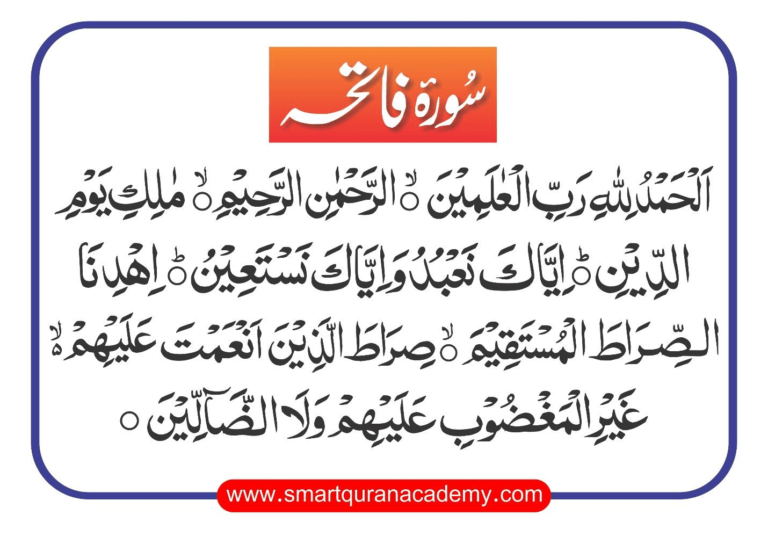
Step 5: Recite Surah Al-Fatihah

Surah Al-Fatihah is recited in all of the rak’ah of salah.

This chapter is called “The Opening,” as it glorifies Allah, acknowledges His mercy and His supremacy, and asks Him to guide it to the straight path. One of the chapters from the Quran that is recited the most often is a special part of every Muslim’s prayers.

Take time to recite Surah Al-Fatihah in a proper manner with understanding of its meaning. Do not hurry; knowing the meaning of the verses makes your concentration in Salah better (Khushu).

surah e Fatiha in Namaz | How To Pray Namaz?

Step 6: Recite another surah

Once you have finished reading Surah Al-Fatihah in the first 2 rak’ahs, then read another Surah from the Qur’an or several verses. Some new students begin with one of the short Surahs (chapters) like Surah Al-Ikhlas, Surah Al-Falaq, or Surah An-Nas, as they are easier to remember.

As you get more knowledge, learn more Surahs to add to your Salah and get closer to the Quran.

surah e Ikhlas in Namaz

Step 7: Perform Ruku (Bowing)

Once you have recited the Quran, say “Allahu Akbar” and then make the bowing position (ruku). Place both hands on your knees, keep your back straight, and lower your head so it is comfortable for your back. No unnecessary movements should be made in your body.

In Ruku, take pride in Allah by reciting the remembrance that has been prescribed by the Prophet Muhammad (ﷺ). This is an opportunity of humility, and Muslims recognize Allah.

Namaz Takbeer

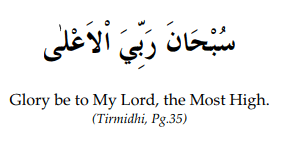
Keep your hands on your knees, your back straight, and your eyes fixed on the ground as you perform sajda. You have to recite the following verse three times:

Namaz Rakoo Tasbeeh

Step 8: Stand up from ruku

Stand up from the bowing position while reciting the words that were taught by the Prophet Muhammad (ﷺ). Stay upright until your back is in natural posture before proceeding to the next step of prayer. This pause is not to be rushed.

Many beginners move too quickly without standing properly. Staying quiet for a while is a part of the Sunnah and a time for remembering Allah.

You have to say the following:

Nimaz
Namaz Takbeer

Step 9: Go into Sujood (Prostration)

Stand back up from Ruku and say Allahu Akbar and go into Sujood. Prostration is known as Sujood. Your forehead, nose, palms, knees and toes are on the floor. One of the most humble positions in Salah.

In Sujood, make use of the words of glorification that the Prophet Muhammad (ﷺ) taught us. Say them slowly and expressively.

  • The meaning of Sujood

The servant is closest to Allah when he is making the five prayers. It is a time of great humility and love. The first gesture is placing the forehead on the ground and is a sign of Allah’s greatness. You are also demonstrating your need for Him! This is a very unique element of Salah.

Recite three times the following:

tasbeeh sajdah
Namaz Takbeer

Step 10: Sit Between Two Sajdas

Do Sujood once and sit up briefly after the first Sujood; recite Allahu Akbar. This is a relaxed and soothing seat. Sit with respect: say the words taught by the Prophet Muhammad (ﷺ). Many Muslims ask Allah for forgiveness in this position. Do not rush. Remain in the initial position and get ready to recite the second Sujood.

  • Why This Sitting is Important?

This brief sitting helps to balance the prayer. It reminds us that worship is not just bowing and prostrating. It’s also about patience and calmness. It’s the time to seek Allah’s mercy and forgiveness. This is a very precious time, because all Muslims must have Allah’s forgiveness granted to them.

Step 11: Second Sajood

This sujood is performed as in the first one. Rest forehead and nose on the ground again. Slowly and deliberately say the words of glorification. The 2nd Sujood makes the 1st Rak’ah complete. This is followed by either a standing or sitting Rak’ah, depending on the prayer, after which Tashahhud is offered.

Every time you repeat Sujood, you are reminded of the beauty of doing so. Sujood is repeated to tell us that being humble must not be a single-moment experience. It should be a part of our life. In each time of prostration, we remind ourselves that we are God’s servant. We are weak; He is mighty. We need Him at all times.

Step 12: Rak’ahs and Tashahhud

If one is praying a prayer of two rak’ahs or more, rise after the second sujood and pray the next rak’ah. If you are in the last rak’ah, then after the second Sujood, sit for Tashahhud.

This will depend on the prayer you are praying. There are two Rak’ahs of Fajr. The times of Dhuhr, Asr, and Isha are four Rak’ahs. Three rak’ahs are performed in Maghrib. Be familiar with the number of rak’ahs.

First-timers should know the number of rak’ahs in each prayer. This simplifies the salah and helps to minimize confusion. If you are aware of the number of Rak’ahs you are performing, you can perform the prayer with confidence. This will also prevent you from making errors.

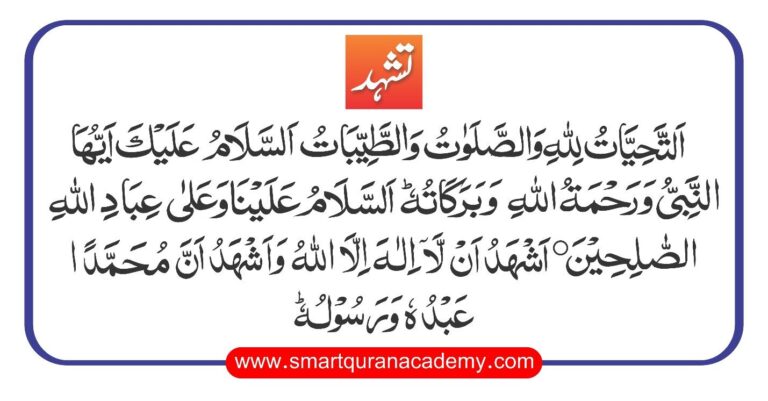
Step 13: Recite Tashahhud

Recite Tashahhud when sitting in the last sitting. It is a beautiful portion of Salah (prayer). It contains invocations to Allāh, salutations, and the testimony of faith. It is a reminder of Allah’s Oneness and His S.W. (Prophet Muhammad (ﷺ)) as His messenger.

Recite it respectfully while sitting. Stay relaxed in your heart and clear in your mind.

  • Why is Tashahhud special?

Tashahhud brings the prayer to a deeper level. It isn’t just a seat. It’s a time of faith and remembrance. It brings us to the thought of believing in Allah, His Angels, His Prophets, and the truthfulness of Islam. It is a powerful portion of prayer and should be read carefully.

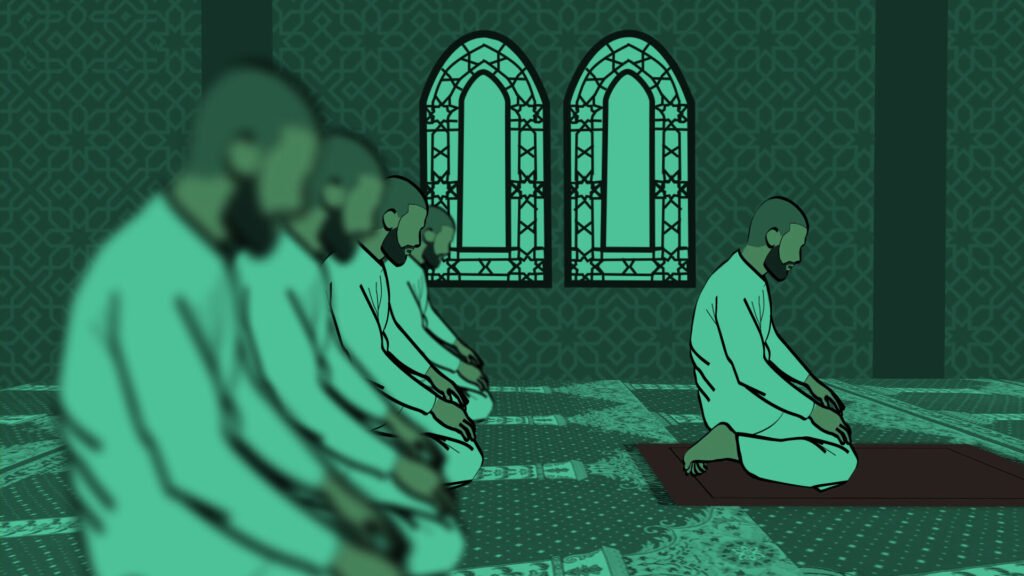
Namaz Attayaat

Step 14: Send Blessings on the Prophet ﷺ

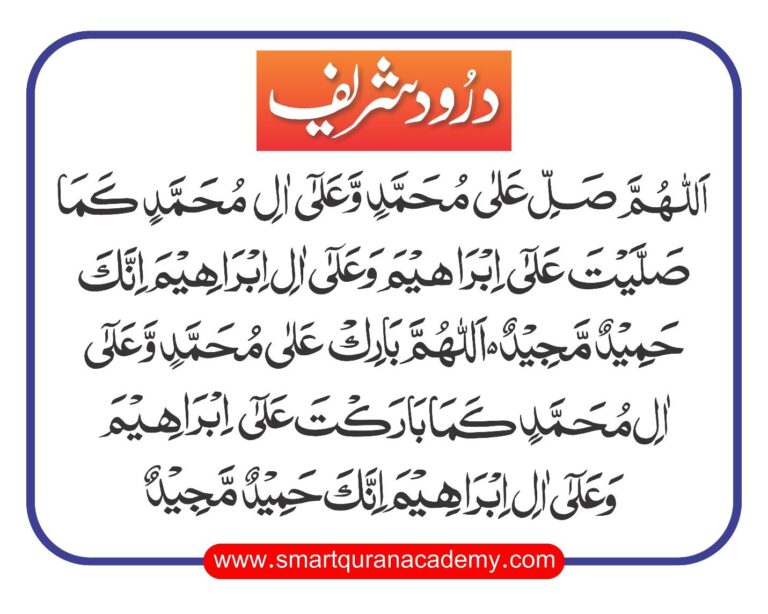
When you have finished Tashahhud, pray blessings upon the Prophet Muhammad (ﷺ). It’s a nice way to honour and love the Messenger of Allah. Muslims pray for Allah’s blessings upon the Prophet and his family, as it has been narrated in the Sunnah. This is a crucial section in the second session. It adds beauty and completeness to the prayer.

  • Why are blessings sent?

The Prophet Muhammad (ﷺ) has given us the greatest instructions on how to remember him. Blessing him is an act of love and obedience. It also reminds us of the great mercy that Allah sent to the world through the Prophet. It is something all Muslims should be able to learn and say with care.

Namaz Drood Shareef

Step 15: End the Prayer with Salam

When you are finished with the prayer, face to the right and pray. Peace be upon you and his mercy. Now turn your head to the left and repeat the words. Salam, this is the end of the prayer. It is peace, and mercy be upon you.

  • Why Salam Matters

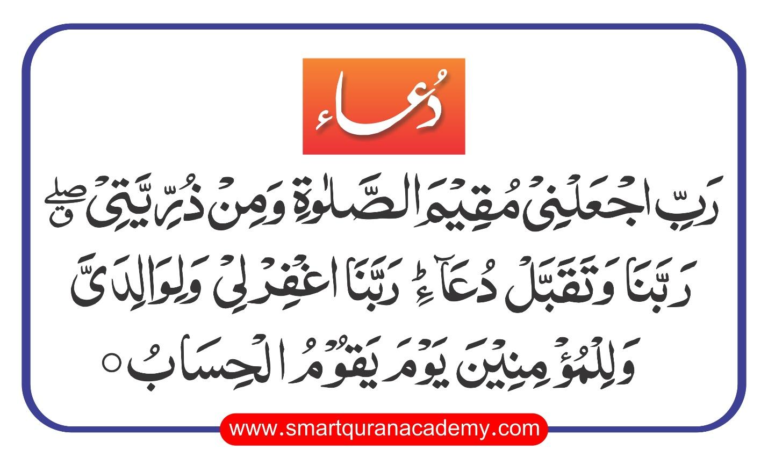
Salam is the last movement of Salah. It indicates that the prayer is whole. Once you reach Salam, you can make duas, remember Allah, or continue your daily routine. Just for now, remain grateful. You have just finished one of the greatest acts of worship.

Namaz Duaa

Step 16: Say Salaam 2 Times

The namaz is then concluded by initially looking over your right shoulder, saying:

Namaz Ending Salam

Common Mistakes which Beginners Should Avoid

There are a lot of little errors that are made by a beginner when learning Salah. This is normal. Everyone starts somewhere. Learning and growing is the key.

These are some of the most frequent errors that are made:

  • Hastily or superficially delivering the prayer.
  • Not remembering to pay attention to the meaning
  • Jumping from one position to another too quickly.
  • Not learning the correct recitation
  • Looking around during prayer instead of maintaining focus. 
  • Forgetting the number of Rak’ahs
  • Talking too quickly without comprehending

Try to pray slowly. Take it step-by-step. If something goes wrong, don’t quit! Keep practicing.

Conclusion

Namaz is a step-by-step process, and learning how to pray Namaz is one of the most important steps in a Muslim’s spiritual progress. Salah is not merely a duty; it is direct communication with Allah, it is a source of peace, and it is a way of finding Allah’s mercy and guidance. While the various movements and recitations are not easy to master for the inexperienced, with practice and dedication, the prayer over time becomes easier and more meaningful.

With qualified teacher guidance, beginners can confidently learn Salah and develop correct prayer habits from the beginning. A best online Quran academy offers customized lessons such as Quran recitation, Tajweed, and practical Salah training, assisting students of all ages to improve their relationship with Allah.

FAQs

Q. What is the number of prayers a Muslim should pray in a day?

The five daily prayers of Islam are Fajr, Dhuhr, Asr, Maghrib, and Isha. There are certain times and certain numbers of Rak’ahs for each prayer. 

Q. Should I pray Namaz if I don’t have the memorization of many Surahs?

Yes, no Muslim is a professional Muslim. All Muslims are newcomers. As long as you have memorized Surah Al-Fatiha and one short Surah, you can pray your Salah and learn more Surahs of the Quran gradually. Do this regularly and build up to more memorization over time.

Q. Does Wudu have to be performed for each Salah?

A Muslim is expected to be in a state of Wudu (ablution) when he is to perform Salah, yes. If, however, your Wudu is not broken since you have prayed, then repeating it is not required. 

Q. What should be the beginners’ priority when learning Salah?

The first rule is for beginners to memorize the correct sequence of the prayer; that is, the movements of the body and the necessary recitations. It is also beneficial to know the meaning of the recitation so that one is more concentrated (Khushu) and has a better spirit (Waqūf) towards Allah. 

Q. If I make a mistake in the salah, what should I do?

If you make a minor error while learning, don’t give up. You need time to learn, and Allah knows your intentions. Practice, learn from errors, and ask for suggestions from an experienced teacher as necessary.

Learn Salah with Certified Quran Instructors

One of the most important steps in the journey of every Muslim is to pray correctly. Our Quran academy online offers one-to-one online Quran classes by experienced teachers to teach children, adults, and new Muslims Salah, Quran recitation, Tajweed, and basic Islamic teachings with confidence. Sign up today for 3 free trial classes and build a strong foundation of your Islamic learning from the comfort of your home.

DMCA.com Protection Status