One of the beautiful creations of Allah is the moon. It is a sign of Allah’s power and wisdom. Throughout Islamic history Muslims have used the moon to determine important dates like Ramadan, Eid-ul-Fitr, Eid-ul-Adha, and other Islamic months. Every time a new moon is seen, Islam calls on believers to remember Allah and make a special dua for blessings, guidance, faith, and protection.
The Dua for the New Moon is a beautiful prayer taught by Prophet Muhammad ﷺ. The dua reminds Muslims that every new month is a gift from Allah and an opportunity to strengthen one’s faith, improve one’s character, and seek Allah’s mercy. It also teaches to be thankful and to rely on Allah in all matters of life.
In today’s busy world, that is why many Muslims are turning to the Online Quran Academy to learn the authentic teachings of Islam. They are learning daily duas, Quran recitation, Tajweed, and the Sunnah of the Prophet ﷺ. By understanding the meaning and importance of the moon dua, Muslims can practice Islam more consciously and develop a stronger relationship with Allah.
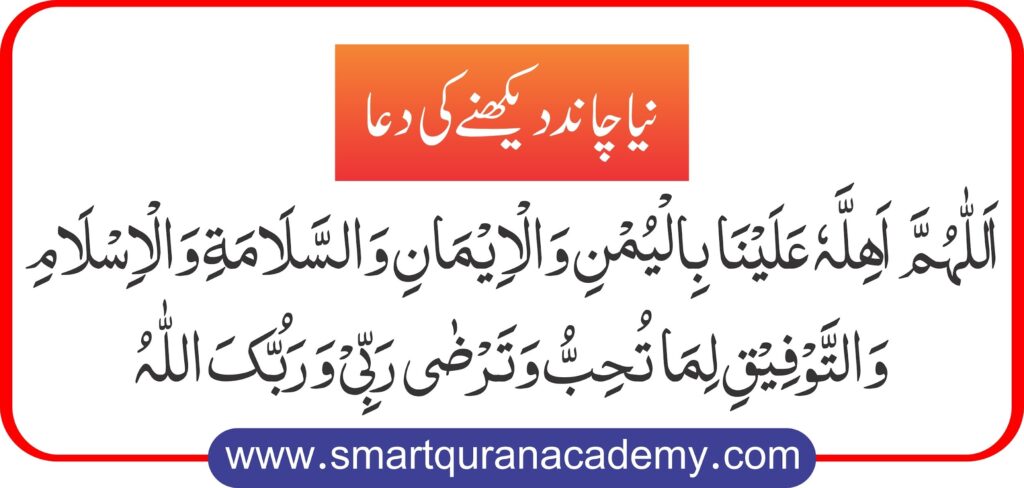
The moon dua is recited when the new crescent moon is seen at the beginning of an Islamic month.
اللهم اهله علينا بالامن والايمان والسلامة والإسلام والتوفيق لما تحب وترضى ربنا وربك الله
‘Our Lord and Your Lord is Allah. O Allah, give us security, faith, peace, Islam, and success in that which You love and are pleased with.’
This dua is from authentic collections, and Prophet Muhammad ﷺ used to recite this when he saw the crescent moon.
The significance of the moon in Islam is that the Islamic calendar is based on lunar months.
In the Quran Allah says that “the sun and moon run their courses to a term appointed”. They are used by humans to determine time, seasons, and important events.
The moon reminds us of the perfection of Allah’s creation and His control over the universe.
The moon dua contains powerful words that represent the needs of all Muslims.
The dua starts with asking Allah for peace and safety. Everyone wants protection from injury, danger, troubles, and the unknown.
With this dua Muslims recognize that the only true protection is from Allah.
Faith is one of the biggest blessings. The dua prays to Allah to increase Iman and keep believers firm in Islam for the month ahead.
A strong faith helps the Muslims to be patient in adversity and grateful in prosperity.
Living productively requires physical, emotional, and spiritual well-being.
The dua guides Muslims to ask Allah for complete protection and well-being.
The supplication is a request to Allah to help us do things that please Him.
A person cannot be on the right path all the time without the guidance of Allah.
The last words are ‘Allah is the Lord of all things, including the moon itself.’
This statement strengthens the Tawheed and reminds the believers that all creation belongs to Allah.


Reciting the moon dua has numerous spiritual and practical benefits.
Whenever Muslims see the new moon and recite this dua, they remember Allah’s greatness.
This deepens their relationship with the Creator and increases their awareness.
The new moon is the first day of a new month. The dua reminds believers to be thankful to Allah for giving them more time to worship, improve themselves, and ask for forgiveness.
The dua’s words focus on peace, faith, guidance, and success. To start a month with these blessings is to set a good spiritual tone for the month.
Rewarded following the Sunnah of Prophet Muhammad ﷺ increases love of his teachings. This dua is a simple but meaningful Sunnah practice.
Every new month is a new opportunity. The dua motivates the believers to go forward with hope, confidence, and trust in Allah.
The religion of Islam commands Muslims to reflect on the signs of Allah in the universe. The moon is mentioned many times in the Quran as a sign of Allah’s wisdom and power.
When Muslims see the moon, they should think about the beauty of Allah’s creation. The exact movement of the moon shows divine order and planning.
Debunks misconceptions about celestial bodies in Islam. The moon does not control the destiny of man, luck, or the future. Indeed, Allah is the All-Knowing of the unseen, the All-Powerful.
The moon reminds us of the blessings of Allah and of the passing of time. Every month the believer comes closer to meeting the Creator, so use your time wisely.

A new moon sighting is a reminder for Muslims that a new month has started. Time is one of the greatest blessings of Allah. A believer should increase in his faith and good works each month.
The dua teaches Muslims to ask Allah for help in all things. All that is good, be it faith, safety, success, or guidance, comes from Him.
Regularly the moon appears as commanded by Allah. This consistency is a reminder to believers to be consistent in prayer, Quran recitation, and good deeds.
The beginning of a new month is a good time to renew intentions and improve habits. Muslims can set goals for worship, learning, charity, and personal growth.
The moon invites us to think of the wonders of creation. Such thinking enhances faith and deepens the understanding of Allah’s greatness.
Parents have a vital role to play in teaching their children about Islamic practices.
Simple methods include:
These activities help children to develop a strong Islamic identity from a young age.
Many Muslims can recite the Quran but may not understand the daily duas taught by the Prophet ﷺ.
Students can learn authentic supplications, Quranic teachings, and Islamic manners in a structured environment with the help of our online Quran learning academy. When students understand the meanings behind these duas, they can sincerely apply them in everyday life and improve their spiritual connection with Allah.
In today’s fast-paced world, people are distracted by work, studies, social media, and daily responsibilities. Thus, many forget to stop and remember Allah throughout the month. The moon dua is a wonderful way to reconnect with your faith and begin each Islamic month with gratitude and purpose.
When a Muslim recites this supplication, he is reminded that each new month is a blessing from Allah. It’s a chance to seek forgiveness, improve worship, strengthen family relations, and do righteous deeds.
The moon dua also urges believers to seek spiritual success rather than material success. There are several financial and personal goals people have, but Islam teaches Muslims to make faith, character, and obedience to Allah their goals.
Many Muslims know about the moon dua but forget to do it regularly. Here are some tips to make it part of your routine:
Try to look at the sky at the beginning of each Islamic month. This simple habit helps develop an awareness of the Islamic calendar.
Learning the Arabic words and what they mean adds more meaning to the supplication and also makes it easier to recite.
Parents can encourage their children to recite the dua together and also explain its importance.
At the beginning of each month set some spiritual goals, for example:
Pause and be grateful to Allah for allowing you to see another month and another chance to worship.
Here are some of the problems in understanding the moon and its significance as explained in Islamic teachings: Muslims need to know the truth to practice their religion correctly.
Myth 1: The Moon Brings Good or Bad Luck
The religion of Islam does not teach that the moon affects luck. The moon is just one of Allah’s creations, and it obeys His command. Good and bad happenings only occur by the decree of Allah.
Myth 2: Specific Moon Phases Influence Human Behaviour
In some cultures, phases of the moon are thought to directly influence people’s destiny or character. Such beliefs are not encouraged by Islam. Only God controls human affairs.
Myth 3: The Moon Possesses Divine Powers
The moon is not an object of worship. Muslims worship Allah alone and consider the moon to be one of His signs in creation.
Myth 4: The Moon Dua is a guarantee for success in this world.
This dua is to ask Allah for his blessings, guidance, faith, and protection. Allah can give worldly success, but the main focus of the dua is on spiritual well-being.
The Islamic calendar is a lunar calendar, so the moon is an important part of Muslim life.
Each month begins with the sighting of the crescent of the new moon. This system has been running since the time of Prophet Muhammad (ﷺ) and continues to unite Muslims across the globe.
Some important Islamic events are determined by the lunar calendar:
Thus, the moon serves as a reminder of significant acts of worship and historical events in Islam.
The moon has much to teach us about faith and about life. Human life also passes through different stages, just like the moon, which first becomes a small crescent and then a full moon and then decreases. Hardship may be followed by strength, and ease by hardship. The moon reminds believers that change is part of Allah’s plan and that patience is needed at every stage of life.
The moon appears regularly, a sign of Allah’s perfect control over the universe. It moves ever onwards, but it never strays from the course Allah has set for it. This encourages Muslims to continue in their worship and obedience.
There are many Muslims who recite prayers without knowing what they mean. True duas from reliable sources help Muslims to follow the real path of Islam with more sincerity.
Students can learn from an online Quran academy:
When Muslims understand what they are saying, it makes their worship more meaningful and impactful.
The Dua for the Moon is a beautiful sunnah that reminds Muslims to start every Islamic month with faith, gratitude, and hope. Its powerful words are a request to Allah for security, strong iman, well-being, guidance, and success in actions that please Him.
The moon is one of the greatest signs of Allah; it teaches Muslims important lessons about time, consistency, reflection, and reliance upon the Creator. Muslims can recite this supplication, understand its meaning, and use it to strengthen their connection with Allah and make every new month an opportunity for spiritual growth.
This dua can be recited alone or with family members and serves as a reminder that true success comes only from Allah. Muslims can learn and practice authentic Islamic supplications through a Quran academy online that can further deepen their faith and help them to apply Islamic teachings in their daily lives.
Q. When is the right time to read Moon Dua?
Moon Dua is a recitation when you see the new crescent moon for the first time at the beginning of an Islamic month. It is a beautiful Sunnah that calls Muslims to pray for the blessings of Allah and to begin the new month with thankfulness.
Q. Why is the moon significant in Islam?
The moon is used to determine the Islamic calendar, including the beginning of Ramadan, Eid and Hajj, and is one of Allah’s signs that reflect His wisdom and perfect creation.
Q. In Islam, does the moon affect luck or destiny?
No, Islam teaches that Allah alone controls destiny and the moon has no power to affect a person’s luck or future. Muslims must put their trust in Allah alone.
Q. What are the rewards of reciting the Moon Dua?
Recitation of the Moon Dua is a revival of a Sunnah of Prophet Muhammad ﷺ and encourages thankfulness and remembrance of Allah. It also reminds Muslims to begin each Islamic month with faith and hope.
Q. Can the Moon Dua be taught and recited by children?
Yes. Parents are encouraged to teach the Moon Dua to their kids so that they can learn true Islamic practices and understand the importance of the Islamic calendar from a young age.
Q. How can I get more authentic Islamic duas?
Our Online Quran Learning Institute has expert teachers who teach real Islamic duas. Students get to learn Quran recitation, Tajweed and other vital Islamic teachings through personalized online Quran classes.
Understanding the meanings of authentic Islamic duas helps Muslims to strengthen their faith and to apply the teachings of Islam in everyday life. Enrol in our Quran academy online to get Quran recitation, Tajweed, daily duas, and Islamic studies through personalized one-to-one online Quran lessons. Begin your learning journey today with 3 free trial classes and develop a deeper connection with the Quran and Sunnah.