
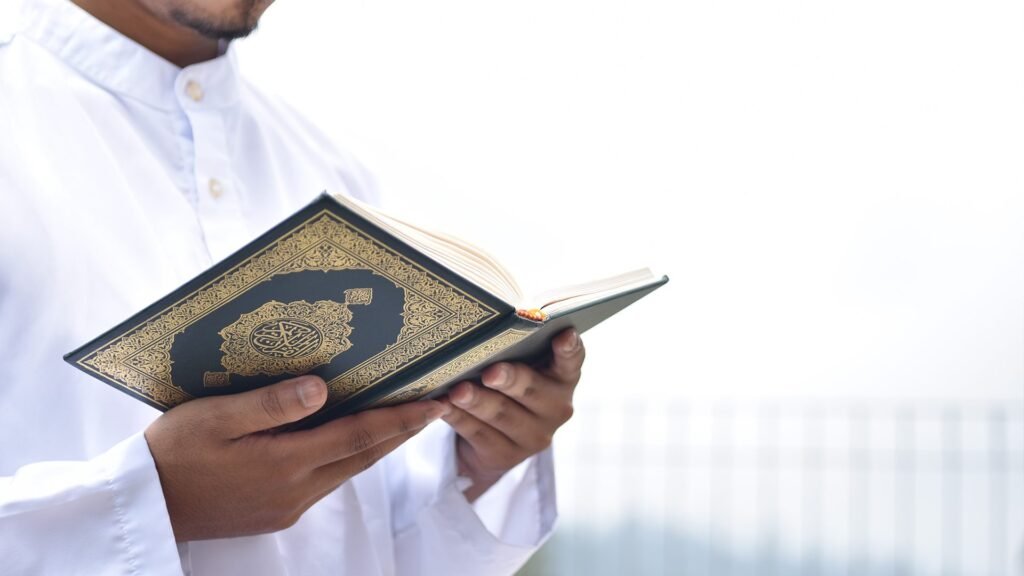
The Qur’an is the most vital reference source for Muslims. It’s not just a book; it is the final revelation of Allah meant to usher in an age of righteousness and justice. Muslims need to know what the rights of the Quran are, so that they may have a stronger relationship with Allah and live by His guidance.
No one is restricted to just reading the Quran; every Muslim who reads it must also show respect for its teachings by acting upon them and implementing them in his or her personal life. Causing them to lose their rights is a form of zulm, and exercising those rights brings barakah in this world and the Akhirah.
What are the Rights of the Quran?
The rights of the Quran are, in fact, the duties or obligations every Muslim owes to this Holy book. These rights are spiritual as well as practical. Among them are reciting the Qur’an, thinking about its meanings, judging by it, keeping it safe (preserving), and teaching it.
In fulfilling them, Muslims make sure that the Quran is a living book in their lives and not simply printed words.
Reciting the Quran Regularly
One of the first rights of the Quran upon is to recite it regularly. The Quran underlines that recitation itself is an act of worship, and it believes that it holds divine guidance in itself. Muslims are often taught to recite some portion of the Quran each day, whether in Arabic or in translation, to keep spiritually strong.
And it is better to recite the Quran with reflection and contemplation. For a Muslim, as He reflects on the message of the verses, this direction will become more pragmatic and immediately applicable to our daily life.
Comprehension and Reflection on Its Teachings
Recitation alone is not enough. Muslims are required to comprehend and consider the preaching of the Quran. This includes understanding of the words, expressions, and their meanings, as well as applying them in practical life.
The study of the Quran enables Muslims to make complex ethical decisions and to be free from sin. It could lead them astray. It makes the reading of the Quran not a display, but an influence on conduct and moral principles.
Application of The Quran In Life
Implementing the teachings of the Quran into your everyday life is another fundamental right of the book. This entails obeying orders, shunning proscriptions, and observing the Noble Quran’s moral enunciations.
When a Muslim follows the teachings of the Qur’an, it amounts to honoring that holy book and also submitting to its authority. Implementation surpasses information, because implementation makes the Quran a living guide rather than something we simply memorize.
Preserving and Respecting the Quran
The Quran deserves to be handled in reverence around the clock. This, of course, includes taking care of it physically, keeping the book clean and dry, storing it away in a safe place, and handling it respectfully. Beyond the physical, respecting the Quran entails treating its message with respect by talking about it appropriately and not abusing it.
As well as saving, teaching the Quran to others is preservation. It imparts its knowledge to live so that wisdom does not die.
Teaching and Sharing the Quran
Muslims are advised to teach the Quran to relatives, neighbors, and parents. Disseminating the teachings of the Quran, we forge unity in faith and make sure that its guidance touches the lives of as many people as possible. The scholars, the teachers, and even parents have a vital role in making this right possible by teaching/allowing others to learn and grasp knowledge of the Quran.
Further Advantages of Fulfilling the Rights of the Quran
To give the Quran its rights brings great blessings to our souls. Muslims find internal peace, increased faith, and moral clarity. It also shields them from getting deviated and builds their link with Allah.
Besides the gain in spirituality, respecting the Quran builds a good character and nurtures a sound attitude towards others. It is a society that respects justice, compassion, and truth – essentially the essence of Islam.
Common Mistakes to Avoid
Many Muslims inadvertently violate the rights of the Quran. Others may simply read it without understanding, handle it carelessly, or neglect to apply its instructions in daily living. Others might postpone teaching it or neglect repeating it at regular intervals.
Eliminating these blunders takes awareness and effort. Muslims must recite the Quran daily and do so consistently to understand the message of Allah and make it an integral part of their life.
Conclusion
The Quran is not a book, it’s a sacred direction; it’s a trust of the divine.” It is the right of every Muslim upon him to read it, understand it, put it into practice, and preserve and transmit its message. It is bringing these rights to life that keeps the Quran a source of guidance and benefit in one’s life.
In following and implementing the Quran, Muslims not only obey Allah’s words, but they also develop a life centered on faith, the ethics of religion, and the attainment of spirituality.
FAQs
What are the primary responsibilities of the Qur’an to Muslims?
The five general rights of the Qur’an are as follows:
1-To read it to the best of one’s ability
2- To understand it
3- To act upon its teaching upon and legal institution (ahkaam)
4-To respect it by prohibiting any form of abuse or desecration, etc.
5-To convey its message to others.
Is recitation of the Quran itself sufficient to fulfill its rights?
No, reciting is important, but we also have to learn and practice from them.
How are Muslims to protect the Quran?
Muslims should keep the Quran clean, store it in a safe place, handle it with respect, and refrain from any misuse of its contents.
Does teaching the Quran to others fulfill its rights?
Yes, part of the process is sharing its knowledge so that it can reach others and can continue to live on into future generations.
What rewards do you attain for practicing the rights of the Quran?
It nourishes faith, gives inner tranquility, develops character, acts as a safeguard against sin, and yields spiritual benefit both in this world and the next
