
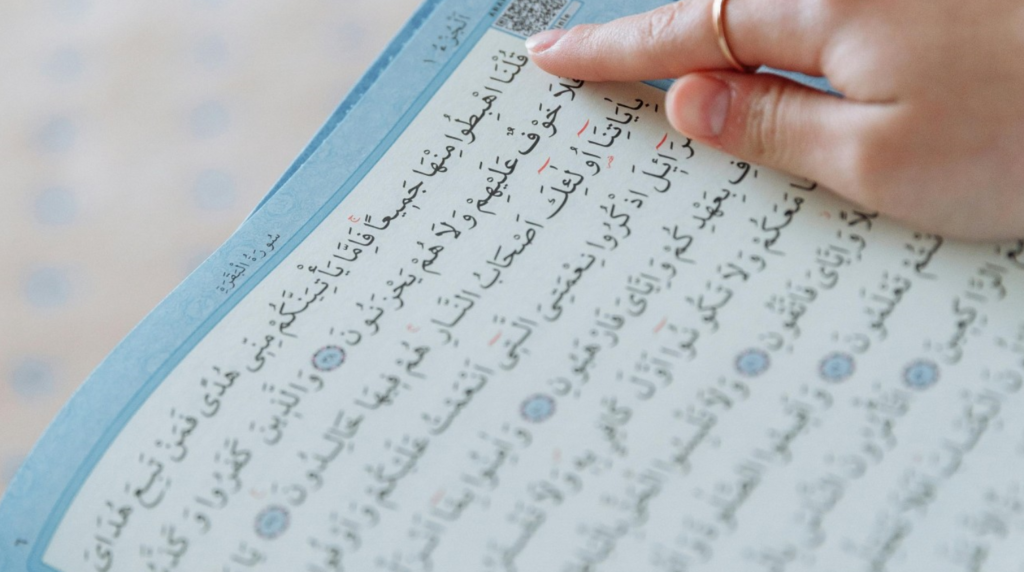
Reciting the Quran correctly is one of the most important responsibilities for every Muslim. While many people learn to read the Quran at a basic level, a large number of readers are unaware of the rules that ensure accurate and proper recitation. This often leads to mistakes in pronunciation that may affect the meaning of words. For this reason, learning Tajweed is not just an optional step but an essential part of Quran education.
Tajweed refers to the set of principles that govern how the Quran should be recited. It ensures that each letter is pronounced from its correct origin and with its proper characteristics. In the past, learning Tajweed required physical access to a qualified teacher, which was not always possible for everyone. Today, however, the availability of online Quran classes has made it significantly easier for students of all ages to learn the Quran with Tajweed from anywhere in the world.
This guide is designed to provide a complete and well-structured understanding of how Tajweed works, why it is important, and how it can be learned effectively through online platforms. Whether you are a beginner or someone who already reads the Quran but wants to improve, this article will give you a clear path forward.
Understanding the Concept of Tajweed
To grasp the significance of Tajweed, one must first of all know what Tajweed entails. An Arabic word forms Tajweed, which translates to ” to make better or to improve. It is used in the context of Quran recitation to enhance the reading of the Quran by using certain rules of pronunciation and articulation.
The Arabic language has a specific point that is pronounced on each letter. These are points found in various regions of the mouth and throat. Tajweed makes sure these points are utilized properly to make sure that every letter is pronounced as intended. Besides pronunciation, Tajweed also includes provisions of the rule of elongation, pauses, and merging or transparency of some sounds.
In the absence of Tajweed, one can read the Quran, but this recitation might be inaccurate and not so beautiful. What is more important is that sometimes wrong pronunciation may result in the shift of the meaning, and that is why correct recitation is so important in Islamic tradition.
The Importance of Tajweed in Quran Learning
We can understand the significance of Tajweed when we reflect on the reason behind Quran recitation. The Quran is not merely a book that is to be read; it is a message that is divine, and it should be preserved and rendered correctly. Tajweed is a key issue of ensuring this precision.
Among the reasons why Tajweed is necessary, the need to preserve the meaning of the Quran is one of the major reasons.
Arabic is a language in which a minor alteration in the pronunciation of a word can change the meaning of the word. Through the study of Tajweed, a reader is convinced that he or she is reciting the words as they were revealed.
Besides maintaining the meaning, Tajweed is associated with the overall quality of recitation. An individual who practices Tajweed recites the Quran with rhythmical and clear recitation that makes the recitation more interesting and spiritually raising. Such an in-depth bond normally causes increased concentration and contemplation during recitation.
The second factor is that the study of Tajweed enables one to adhere to the way of recitation that the Prophet Muhammad ﷺ used. This attachment to tradition brings about a feeling of genuineness and satisfaction to the learning process.
Why Online Learning is an Effective Way to Master Tajweed
Online learning has changed the manner in which individuals approach education in recent years, and Quran learning is not an exception. Online classes are a good option for students who want to study Tajweed.
A key benefit of online learning is that it allows an individual to get customized teaching. Students in most situations are taught in one-on-one sessions where the teacher can pay full attention to fixing pronunciation and help the student work depending on his or her needs. It is not easy to get this kind of attention in the more traditional group settings.
Another important benefit is flexibility. Students are able to plan their classes at a time. It fits their day-to-day lives, and therefore, it is easy to be consistent. This would especially be beneficial to busy students and working adults.
Geographical limitations are also eliminated by online learning. No longer are students limited to local teachers; students can study with qualified teachers wherever they are. This exposure to the experienced teachers goes a long way in enhancing the quality of learning.
Moreover, home-based learning gives the students a comfortable environment in which they can practice without fear. This is particularly helpful to newcomers who may be shy or self-conscious in a mainstream classroom.
The Step-by-Step Process of Learning Tajweed
To understand Tajweed, a systematic way is necessary. It is not a one-day thing, but once one has the correct approach, then it will be controllable and fulfilling. One should have a solid background in the basics of reading the Quran as the initial stage of learning Tajweed.
As soon as an elementary level of reading is achieved, the emphasis is placed on pronunciation. This includes the learning of appropriate articulation points of every letter, or Makharij. The students learn to make sounds using the throat, tongue, and lips until they can pronounce all letters correctly.
Once the students have learned how to pronounce, they start learning the laws of Tajweed. These rules describe the interaction of some letters with one another and the way they have to be altered in various cases. At this point, knowledge is slowly integrated with practice.
The second thing is the implementation of these rules when pronouncing the Quran. This takes time and practice, as the students have to be taught how to know when and how to apply each rule when reciting.
Lastly, feedback and periodic revision are needed to improve. The teacher is very important in correcting the student and showing him/her the right way of reciting. With time, fluency and confidence come as a result of practice.
Challenges in Learning Tajweed and How to Overcome Them
We can understand the significance of Tajweed when we reflect on the reason behind Quran recitation. The Quran is not a book to be read; it is a message that is divine, and it must be maintained and translated properly. One of the problems of this precision is tajweed.
One of the most significant reasons is the necessity to keep the meaning of the Quran because of the necessity of Tajweed. Arabic is a language where a slight change in the sound of pronunciation of a word can alter the interpretation of the word. Through the study of Tajweed, a reader is convinced that he or she is reciting the words as they were revealed.
Tajweed is also linked to the overall quality of recitation, other than preservation of meaning. A person who observes Tajweed recites the Quran with rhythmic and clear recitation that leaves the recitation to be interesting and spiritually uplifting. Such an in-depth bond normally causes increased concentration and contemplation during recitation.
The second factor is that the study of Tajweed enables one to adhere to the way of recitation that the Prophet Muhammad ﷺ used. This sense of authenticity and contentment to the learning process can be attributed to this attachment to tradition.
How Long Does It Take to Learn Tajweed?
Learning Tajweed takes time, depending on the level of dedication and the starting point of the student. It can also take some months before novices learn the fundamentals. But to be fluent and confident in using these rules, it would be necessary to practice them over an extended duration.
One should keep in mind that Tajweed is not something that should be learned once and is an ongoing process. Even high-level learners also perfect their recitation with time.
Building a Long-Term Connection with the Quran
It is not only about learning to pronounce better, but about learning to get closer to the Quran through Tajweed. The more the students get used to the recitation, the more connected they tend to be with the words they are reading emotionally and spiritually.
This relationship promotes uniformity and inspires students to keep on with it. As time goes by, the student might decide to venture into higher issues like memorization or the meaning of the Quran.
Conclusion
The learning and teaching of the Quran with Tajweed is a necessary process that one has to do in case he/she wishes to recite the Quran correctly and with meaning. Although this process might appear difficult initially, the systematic organization, regular training, and effective mentoring will ensure that anyone can do it.
This has been made easier than ever before by online learning. Having the right to study with qualified teachers, work with flexible schedules, and train in a comfortable environment, students have all the means to succeed.
The decision to be on the first step in learning Tajweed is a step that brings personal improvement and spiritual satisfaction. Through patience and determination, anyone is capable of learning to recite the Quran and have a lifetime relationship with the Quran.
FAQs About Learn Quran with Tajweed Online
What is the simple meaning of Tajweed?
Tajweed is the code of rules that is applied to recite the Quran correctly, pronouncing all the letters and using the right sounds as well as the correct place.
Should Tajweed be learned to read the Quran?
Yes, we need Tajweed to be able to pronounce the words correctly and prevent errors that alter the meaning of words.
Would I be able to study Tajweed online?
Yes, online learning can be very effective under the leadership of a qualified teacher who can give real-time corrections and structured lessons.
What is the duration of mastering Tajweed?
One can learn basic Tajweed in a span of a few months, but can master it with long-term practice.
Should beginners begin Tajweed at once?
One must learn simple Quran reading and then begin to learn Tajweed slowly to develop a strong base.
Which is the largest error students commit in Tajweed?
The most widespread is disregarding the rules of pronunciation and reading too fast without applying the principles of Tajweed.
Does one need a teacher to learn Tajweed?
Yes, it requires a teacher to correct and teach the right pronunciation that cannot be learnt entirely on their own.
