
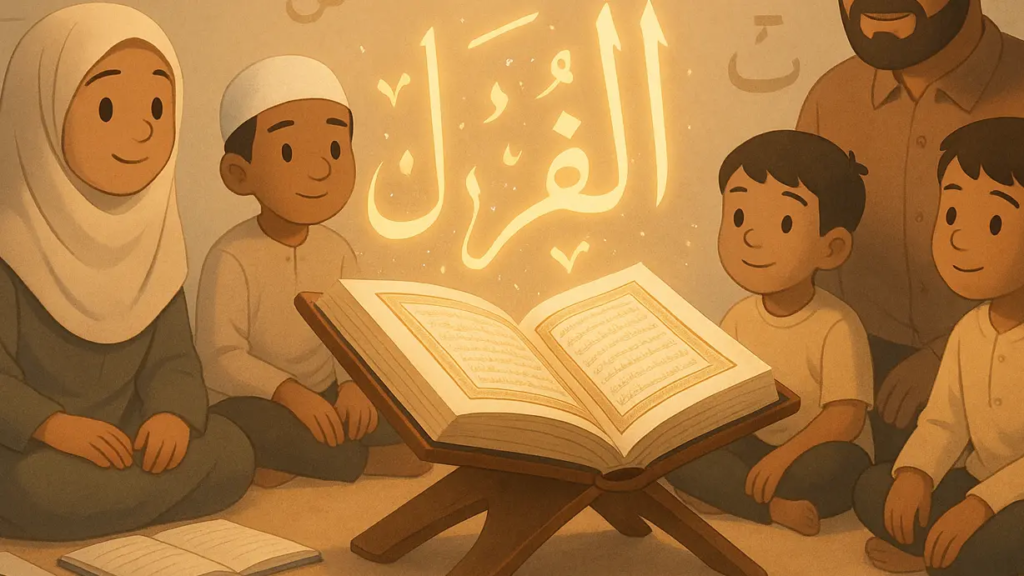
For countless Muslims across the globe, learning how to read and comprehend the Qur’an is not merely an academic endeavor; it is truly a spiritual journey. However, for some new learners, especially those who have never studied the Qur’an before or are unable to read Arabic, the process often seems somewhat overwhelming and even intimidating.
Common questions such as “Where should I begin?”, “Do I need to learn Arabic before starting to read the Qur’an?” and “Are there ways to learn the Qur’an online very well?” will be asked by many new learners (in addition to those with intermediate levels of Qur’anic knowledge). With structured systems and qualified teachers, online Quran classes for beginners now provide a clear and effective path for anyone who wants to start from zero.
However, thanks to advances in technology and the availability of online Qur’an classes for beginners, there is now an abundance of structured systems and qualified teachers to provide new learners a clear and effective path to take from being a beginner to becoming a person who can confidently read the Qur’an with the correct pronunciation.
Thus, the purpose of this article is to provide a new learner with a complete map: from developing a basic understanding of the Qur’an to ultimately achieving confident Qur’anic recitation with the proper pronunciation.
Understanding the Basics of Quran Learning
Before beginning the use of this map, it is very important to know that studying the Qur’an is unlike studying many other subjects. The Qur’an is to be recited in Arabic, so having the ability to pronounce the Arabic alphabet correctly is critical; therefore, all new learners are first taught foundational elements of Qur’anic study, rather than being placed directly into reading from the Qur’an.
Learning the Quran involves three main stages:
- Recognition of Arabic letters
- Correct pronunciation (Makharij)
- Fluent recitation with Tajweed
Skipping any of these stages can lead to incorrect reading habits, which are difficult to fix later. That’s why a structured approach is necessary.
Why Online Quran Learning is Ideal for Beginners
The way people learn about Islam, specifically the Quran, has changed greatly through online learning for beginners. Online Quran classes also remove many of the barriers of traditional learning, and provide an environment where beginners feel well supported and able to learn new things about the Qur’an.
One significant benefit of online learning for beginners is the one-on-one attention they receive from teachers at most Qur’an academies. Teachers can work one-on-one with each student to ensure their mistakes are corrected and guide them through the learning process.
Another very important benefit of online learning is the flexibility it offers to beginners. Many beginners are unable to grasp new concepts in one sitting, and online Qur’an classes allow them to learn these concepts at their own pace without feeling rushed.
Additionally, when beginners learn from home, they do not feel as self-conscious about their abilities and are therefore able to learn more comfortably (this is especially true for adult learners).
Step-by-Step Guide to Learning the Quran Online
Step 1: Starting with Noorani Qaida
All beginners should start with Noorani Qaida, which is a Book designed for beginners to teach them the fundamentals of reading the Qur’an.
At this stage, students will learn:
1 – Arabic Alphabet
2 – Shape of Letters
3 – Connecting Letters to Form Words
4 – Basic Rules of Pronunciation
This is a fundamental step in that it establishes the groundwork for everything that is done from here on. When a strong base in Qaida is established, the student will have at least made fewer mistakes throughout their next few steps and stages.
Step 2: Learning Correct Pronunciation (Makharij)
As soon as the student learns to identify the Arabic alphabet, they must learn to pronounce the letters appropriately. Each letter originates from a different location within the mouth or throat, which are referred to as either Makharij or points of articulation.
For students new to Arabic, this will often be difficult due to the unique sounds produced by many Arabic letters that do not exist in many other languages. With the assistance of a qualified teacher, the student will eventually learn to pronounce the Arabic alphabet.
This is a vital step because mispronunciation can alter or distort word meanings.
Step 3: Basic Quran Reading
Upon achieving proficiency in Qaida and learning to pronounce the Arabic alphabet, the student begins to read the Qur’an. While reading the Qur’an, a new reader will be able to:
- Read clearly and slowly.
- Become familiar with words.
- Build confidence.
A teacher will assist the student on a word-by-word basis, correcting errors and helping the student to work on their fluency.
Step 4: Introduction to Tajweed
Tajweed is the rule for reciting the Qur’an. Once a new reader is able to read the Qur’an, they will begin to learn the rules for reciting the Qur’an that will improve the accuracy and beauty of their recitation.
Basic Tajweed includes:
- An understanding of the rules surrounding the sounds of the letters ‘noon’ and ‘meem’.
- An understanding of how to lengthen (madd) certain letters.
- An understanding of the rules of when to stop during recitation.
Learning Tajweed will enable the reader to recite the Qur’an in accordance with the style in which it was revealed.
Step 5: Regular Practice and Revision
Practice is the most important part of learning the Quran. Beginners must revise their lessons daily to retain what they have learned.
Effective practice methods include:
- Reading aloud
- Repeating difficult words
- Listening to a recitation
- Recording your own reading
Consistency is more important than long study hours.
Common Mistakes Beginners Should Avoid
Mistakes made by beginners can often impede their ability to learn to read the Quran as quickly as possible. One of those errors is reading the Qur’an too quickly; not understanding the foundational aspects of reading the Qur’an can cause an individual to mispronounce words incorrectly.
Another mistake is that many beginners do not review or apply what they have previously learned, without practicing on a regular basis. It is easy for people to forget what they have learned earlier.
Some beginners will attempt to teach themselves how to read the Qur’an without the guidance of a qualified instructor. It is possible to learn how to read the Qur’an without an instructor, but having an instructor guides in learning how to read properly and prevents the long-term development of problems that would stem from learning incorrectly.
How to Stay Consistent as a Beginner
Commencing your Quran journey can provide both (spiritual and personal) benefits, such as: it strengthens your connection to Allah, develops discipline/consistency, increases focus/patience, and improves your understanding of Islamic teachings. Even tiny advances along the way can have a huge effect on your life.
Choosing the Right Online Quran Academy
For beginners, selecting the right academy can make a huge difference.
Look for the following features:
Qualified Teachers
Teachers should have proper knowledge of Tajweed and experience in teaching beginners.
Structured Curriculum
A step-by-step learning plan is essential for beginners.
One-on-One Classes
Personal attention helps beginners learn faster.
Trial Classes
A free trial allows you to evaluate the teaching style.
Flexible Timings
Important for maintaining consistency.
Benefits of Learning the Quran Online for Beginners
Starting your Quran journey brings both spiritual and personal benefits.
- Strengthens your connection with Allah
- Builds discipline and consistency
- Improves focus and patience
- Enhances understanding of Islamic teachings
Even little progress can have a meaningful impact on your life.
How Long Does It Take for Beginners to Learn Quran?
The time required varies from person to person.
- Noorani Qaida: 1–3 months
- Basic Quran reading: 3–6 months
- Tajweed basics: 6–12 months
With consistent effort, beginners can achieve noticeable progress within a few months.
Building a Long-Term Quran Learning Journey
The Quran is not just a temporary goal; rather, it is a lifelong pursuit. Beginners should seek progress over perfection. After you master the basic reading level, you may manage with students may begin working on:
- Advanced tajweed
- Memorising (hifz)
- Understanding translation
Most essential is that, with every step you take towards knowing the Quran better, you will build a stronger relationship with the Quran.
FAQs
Is it possible to learn the Arabic Quran through an online platform without knowing any Arabic?
Yes, even if you’re a beginner, it is possible to start without any prior knowledge of the Arabic language. You will begin by learning the Noorani Qaida, which breaks down everything for you gradually.
Can adults comfortably learn to read the Quran online?
Yes! Adult learners can comfortably take private one-on-one teaching lessons online without any hesitation.
How often should beginners practice?
As often as possible! Practicing every day, even for a very short period of time every day, is the best way to make sure that your progress will continue to grow steadily.
Do you have to have a teacher to read the Quran?
You do not necessarily need a teacher when initially learning the basics of how to read the Quran. However, having a teacher will help you learn how to pronounce correctly, as well as help you progress at a much faster pace.
What is the first step to learning how to read the Quran?
The very first step for anyone in learning to read the Quran is through the Noorani Qaida, which is the foundation skill of how to read the Arabic Quran.
Conclusion
While learning to read the Arabic Quran online as a beginner might seem hard at first, it can be simple and very enjoyable if you take the right approach. With the correct structure, a knowledgeable teacher, and practicing consistently, anyone can achieve their goal of being able to read the Arabic Quran. No matter whether you are starting to learn how to read the Arabic Quran for yourself or for your child, taking the first step is the most important part. With the amount of online learning available to today’s learners, there are no limitations to your ability to grow and connect with the Arabic Quran.
