
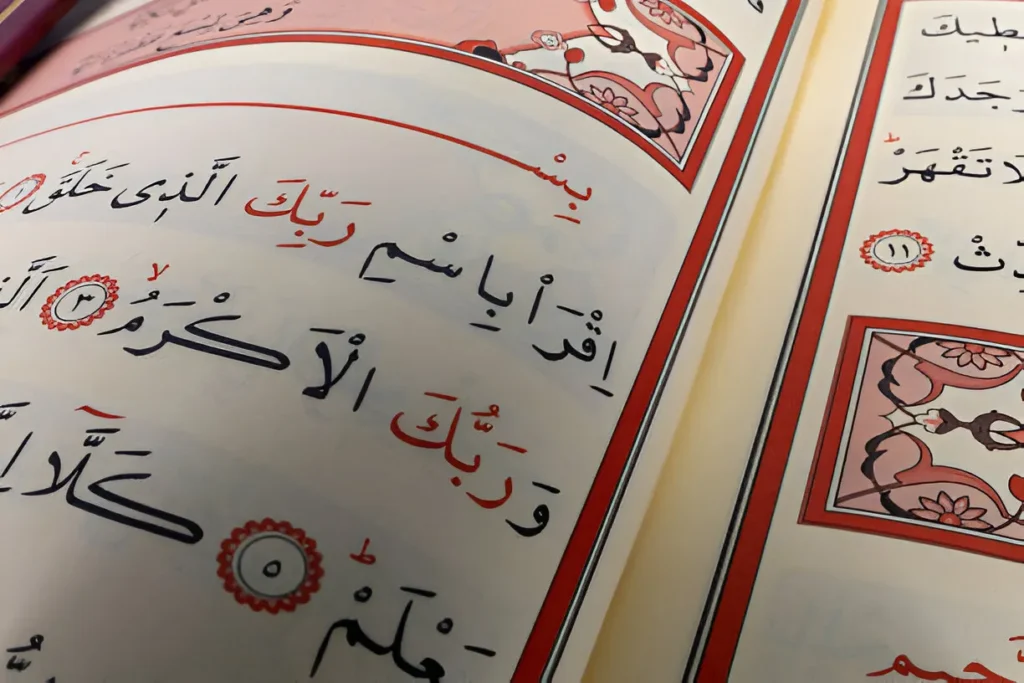
One of the objectives of all Muslims is to read the Quran in Arabic. The Quran was translated into Arabic, and its profundity and charm can only be retained in its original language. Most beginners fear the initial stages of learning Arabic because they view pronunciation and Tajweed rules as complex. Yet, anyone can be trained to read the Quran properly as long as one has the right learning method and practices it regularly.
This novice tutorial describes straightforward and efficient measures that assist students in training proper and viable skills in reading the Quran and establishing self-confidence and spiritual reliance.
The Significance of Learning to Read the Quran in Arabic
The Quran is not only to be read but also to be read correctly. Every Arabic letter has an accurate sound, and correct pronunciation safeguards the initial meaning of the verses. Reciting the Quran correctly enables Muslims to be immersed in the message of the Quran.
Key Points:
- The Quran was written in Arabic and retained Godly language.
- Proper pronunciation avoids altered meanings.
- Alienation during the Salah (prayer) is enhanced through proper recitation.
- Spiritual knowledge is enhanced during reading in Arabic.
- A greater reward and satisfaction are added to accurate recitation.
- Helps build life long association with the Quran.
Comprehending the Alphabet in Arabic
The most fundamental thing that beginners need to know is the Arabic alphabet. In contrast to English, the letters in Arabic vary in form, depending on the location of a letter in a word. Learning letters and sounds is the starting point for fluent reading of the Quran.
Important Learning Steps:
- Master each of the 28 letters of the Arabic language.
- Learn letter end, letter beginning, and letter middle.
- Use pronunciation as you are learning each letter.
- Determine similar but different letters.
- Take simple books of learning like Qaida lessons.
- Repeating letters per day will enhance faster recognition.
Correct Pronunciation (Makharij) Learning
Makharij are the right pronunciation marks of Arabic letters. Each letter is formed in a particular part of the mouth or throat. It is not easy to learn when a beginner encounters some sounds that are not present in other languages.
Pronunciation Guidelines:
- Practice such throat sounds as ع, ح, and غ.
- Practice tongue placement in such letters as ر and ط.
- Focus on lip sounds like ب, ف, and م.
- Do not substitute Arabic accents with local accents.
- One will have to practice until it becomes natural.
- Now hear professional reciters of the Quran.
Being Familiar with Simple Tajweed Rules
The rules of Tajweed make sure that the recitation of the Quran is precise and beautiful. These principles dictate the way of pronunciation, stretching, combination, or halting of letters in the process of reading. Knowing Tajweed prevents beginners from committing the mistakes that are common in recitation.
Essential Tajweed Rules:
- Regulations of Noon Sakinah and Tanween.
- Rules of pronunciation of Meem Sakinah.
- Rules of elongation of sounds.
- Adequate signs of stopping and pausing.
- Heavy and light letter pronunciation.
- Good articulation and no omission of letters.
Starting With Short Surahs
Novices are advised to start learning in short chapters rather than in long Surahs. It is a way of instilling confidence and enabling the learners to concentrate on accuracy. Learning occurs slowly, and this generates no pressure.
Effective Practice Method:
- Begin with brief Surahs of Juz Amma.
- Repeat one line several times and proceed.
- Break up into small parts to read.
- Revise learned Surahs daily.
- Practice with memorizing and reading.
- Give attention to the clarity but not speed.
The Function of Listening and Repetition
One of the best methods of enhancing Quran recitation is listening. Novices inherently master pronunciation as a result of imitation. Fluency and rhythm are enhanced by repeating after the other expert reciters.
Best Listening Practices:
- Hear low-pitched Quran reading every day.
- Repeating the verses right after listening.
- Practise against national experts.
- Use aural learning on problematic words.
- Repeat the practice several times.
- Tape your recitation to self-evaluate.
Education With a Qualified Teacher
Though it is a good idea when self-study is used, a qualified teacher will make sure that learning is done properly. Educators detect errors at a very early stage and give systematic lessons. Supervision also ensures that bad habits are avoided, and this is hard to rectify in later ages.
The advantages of Learning With a Teacher:
- Correction of pronunciation mistakes.
- Guidance in doing Proper Tajweed.
- Personalized learning pace.
- Sequential development of lessons.
- Suggestion and encouragement.
- Higher levels of confidence in recitation.
General Pitfalls
A lot of learning difficulties are encountered by people due to improper ways of learning. It is more effective to avoid common mistakes, accelerate progress, and enhance accuracy. Consciousness will aid learners in being motivated.
Mistakes to Avoid:
- Reading too fast and not knowing the rules.
- Disregard of the basics of Tajweed.
- Skipping alphabet practice.
- Practicing irregularly.
- Without listening, learning to recite correctly.
- Disheartened by slow progress.
Developing a Daily Quran Reading Practice
Regularity is greater than the lengthy study time. Minimization of everyday practice brings about sustainable change. Routine building aids the learners in ensuring consistency in their progress.
Daily Habit Tips:
- Practice 15–20 minutes every day.
- Have a schedule of definite learning.
- Repeat earlier acquired lessons on a regular basis.
- Do not study with reading alone and listening alone.
- Monitor improvement objectives each week.
- Stay patient and consistent.
Fruits of Reading the Quran Correctly
The right recitation of the Quran leads to peace in the soul and personal growth. It enhances discipline, concentration, and emotional stability. Correct reading also makes one understand and appreciate the Quran.
Major Benefits:
- Greater spiritual affiliation.
- Bravery in recitation of prayers.
- Improved capability of memorizing.
- Better pronunciation in Arabic.
Conclusion
It is a slow but rewarding process of learning how to read the Quran in Arabic. Novices will at first experience some difficulties in pronunciation in the Arabic language, but with practice, they can improve. With practice and learning of Tajweed rules, the correct Quran recitation can be attained by any person by mastering the alphabet.
The correct reading of the Quran brings peace, assurance, and spiritual fulfillment with patience, guidance, and perseverance.
FAQs
1. What is the time of learning to read the Quran correctly?
The duration of learning is different from the practice consistency. With practice, most beginners gain simple reading skills in a period of 3 to 6 months.
2. Is it necessary to know Arabic to read the Quran?
Reading Arabic is not mandatory, but it is amusing to understand. One can learn correct pronunciation and Tajweed without understanding the entire language.
3. Is it possible to teach adults reading Quran as a beginner?
Yes. With the help of systematic training, many adults are able to learn to read the Quran without even having a background in Arabic.
4. Should beginning students have Tajweed?
Yes. Tajweed is used to guarantee the right pronunciation as well as safeguard the meaning of Quranic words in recitation.
5. How can it be better to learn to pronounce the Quran?
The most efficient ones are regular exercises, listening to competent reciters, and studying with an instructor.
