
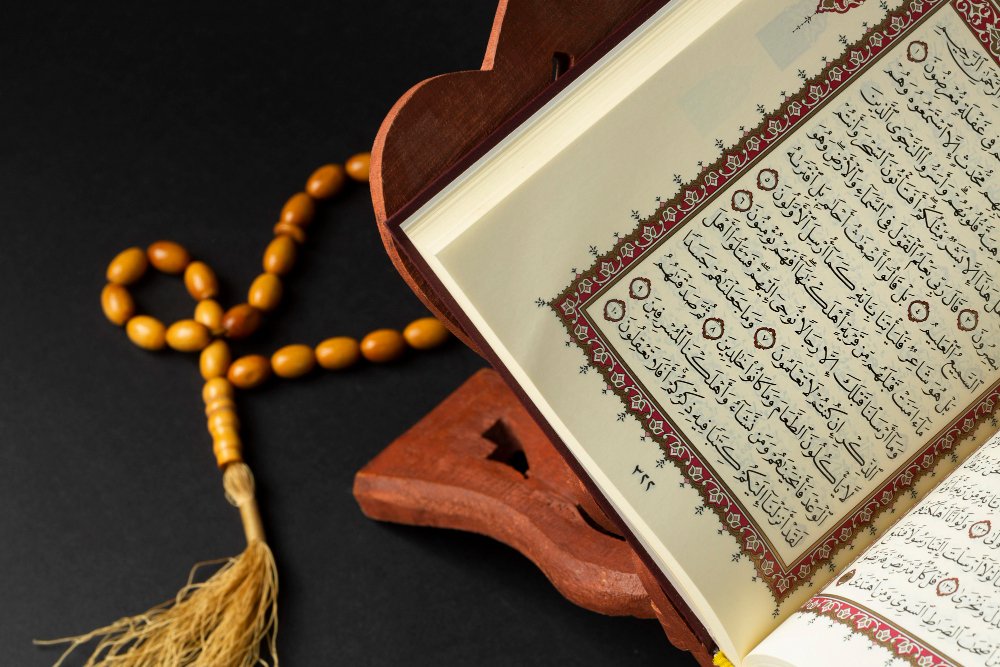
Complete Guide to Quran Tajweed Rules with Practical Examples. Tajweed isn’t just about sounding good when reciting the Quran; it’s about preserving the exact way the words of Allah were revealed. The word Tajweed comes from the Arabic root jawwada, which means “to make better” or “to improve.” In simple terms, Tajweed is the set of rules that teaches you how to pronounce each letter of the Quran correctly, giving every letter its full rights and characteristics.
Think of the Quran like a priceless melody. If even one note is played incorrectly, the entire tune feels off. Similarly, reciting the Quran without Tajweed can unintentionally change meanings, distort sounds, or reduce the beauty of Allah’s words. Tajweed protects the Quran from this distortion. It ensures clarity, precision, and respect for every syllable.
Many people assume Tajweed is only for scholars or professional reciters. That’s a common misconception. Tajweed is for everyone who reads the Quran, whether you’re a beginner slowly learning Surah Al-Fatiha or someone completing the Quran regularly. The Prophet ﷺ himself recited the Quran with Tajweed, and he encouraged his companions to recite it beautifully and correctly.
In this guide, we’ll walk through Tajweed rules step by step, using simple language and practical examples. No overwhelming technical jargon. No confusing explanations. Just clear, human-friendly learning, like sitting with a teacher who patiently explains every sound until it clicks.
Importance of Learning Tajweed for Every Muslim
Learning Tajweed isn’t just a “nice-to-have” skill; it’s a responsibility. The Quran was revealed in clear Arabic, and Allah commands believers to recite it properly. When we recite without Tajweed, we risk mispronouncing letters, which can sometimes alter meanings completely. That’s not something to take lightly.
Spiritually, Tajweed deepens your connection with the Quran. When you recite correctly, the words flow smoothly, your heart becomes present, and your focus sharpens. You’re not just reading you’re experiencing the Quran. Many people notice their khushu’ (humility) in prayer increases once they improve their Tajweed.
From a linguistic perspective, Arabic is a precise language. A slight change in pronunciation can turn one word into another. For example, confusing the letters س (Seen) and ص (Saad) changes both sound and meaning. Tajweed acts like a safeguard, ensuring every letter stays true to its origin.
There’s also a communal benefit. When Muslims recite the Quran in the same way across the world, Tajweed preserves unity and authenticity. Whether you’re in Makkah, Malaysia, or Morocco, the Quran sounds the same. That consistency is powerful.
And let’s be honest, reciting with Tajweed just feels good. It boosts confidence, improves fluency, and makes you want to recite more often. Once you taste that sweetness, there’s no going back.
Historical Background of Tajweed علم التجويد
Tajweed didn’t appear overnight as a textbook subject. Its roots go all the way back to the time of the Prophet Muhammad ﷺ. The Quran was revealed orally, and the Prophet ﷺ taught his companions how to recite it exactly as Jibreel عليه السلام recited it to him. This oral transmission was the first and purest form of Tajweed.
As Islam spread beyond Arabia, non-Arabs began embracing Islam. Naturally, differences in accents and pronunciation emerged. To protect the Quran from being altered, scholars began documenting recitation rules. This marked the formal birth of Tajweed as a science.
Great scholars like Imam Abu Ubaid Al-Qasim ibn Salam and Imam Ibn Al-Jazari played a huge role in codifying Tajweed rules. Ibn Al-Jazari famously said:
“Applying Tajweed is obligatory, and whoever does not recite with Tajweed is sinful.”
Over time, Tajweed became an essential branch of Quranic sciences, taught systematically with clear rules, examples, and classifications. Yet despite its structured form, Tajweed remains deeply rooted in oral tradition. Books can guide you, but listening and repeating are still the heart of learning Tajweed.
Today, Tajweed bridges the past and present. When you recite with Tajweed, you’re echoing the same sounds recited by the Prophet ﷺ over 1400 years ago. That connection alone makes learning Tajweed worth every effort.
Foundations of Tajweed – Understanding Arabic Letters
Before diving into advanced rules, Tajweed begins with understanding Arabic letters themselves. Each letter has a home and a personality. Ignore either, and pronunciation falls apart.
Makharij al-Huruf (Points of Articulation)
Makharij refers to the exact place from where a letter originates when pronounced. Arabic letters emerge from specific points in the mouth, throat, tongue, lips, and nasal passage. Scholars classify these into five main areas and seventeen detailed points.
For example, the letter ق (Qaaf) comes from the back of the tongue touching the soft palate, while ك (Kaaf) is slightly forward. Mixing them up is a common beginner mistake. Another example is ع (Ayn) and أ (Hamzah). One comes from the middle of the throat, the other from its deepest part, a subtle difference, but critical.
Practically, the best way to learn Makharij is by exaggeration at first. Stretch the sound. Feel where it comes from. Over time, your mouth muscles memorize the movement naturally.
Mastering Makharij is like setting a strong foundation for a house. Without it, everything built on top becomes unstable.
Sifaat al-Huruf (Characteristics of Letters)
If Makharij is where the sound comes from, Sifaat is how the sound behaves. Each letter has permanent characteristics like heaviness, softness, flow, or sharpness.
For example:
- س flows smoothly (hams)
- ق is heavy and strong (isti’laa)
- ب stops abruptly (shiddah)
Understanding these traits helps you avoid robotic recitation. Instead, your recitation becomes dynamic, expressive, and alive. You’ll notice the Quran starts to “breathe” differently once you apply Sifaat correctly.
Rules of Noon Saakin and Tanween
These are among the most commonly used Tajweed rules, and once you understand them, you’ll start noticing them everywhere in the Quran.
Izhar (Clear Pronunciation)
Izhar means clarity. When Noon Saakin or Tanween is followed by one of six throat letters (ء هـ ع ح غ خ), the Noon sound is pronounced clearly without nasalization.
Example:
مِنْ هَادٍ
Here, the Noon is pronounced clearly because هـ is a throat letter.
Izhar feels clean and direct, no hiding, no merging. Just pure sound.
Idgham (Merging)
Idgham means merging one letter into another. It happens when Noon Saakin or Tanween is followed by specific letters.
There are two types:
- With Ghunnah (nasal sound): ي ن م و
- Without Ghunnah: ل ر
Example with Ghunnah:
مِنْ وَالٍ → nasal sound
Example without Ghunnah:
مِنْ رَبِّهِم
Idgham adds flow and softness to recitation when applied correctly.
Iqlab (Conversion)
Iqlab is simple but unique. When Noon Saakin or Tanween is followed by ب, the Noon sound changes into a light م sound with Ghunnah.
Example:
أَنْبِئْهُمْ
You’ll notice a small Meem sign in the Mushaf, your visual clue to apply Iqlab.
Ikhfa (Concealment)
Ikhfa is the middle ground, not fully clear, not fully merged. It occurs with 15 specific letters.
Example:
مِنْ شَرِّ
The sound is hidden slightly with a nasal tone. Ikhfa gives the Quran its gentle rhythm when done right.
Rules of Meem Saakin
After mastering Noon Saakin and Tanween, the rules of Meem Saakin feel like a natural next step. A Meem Saakin is simply the letter م with a sukoon ( ْ ) on it. These rules control how the Meem sound behaves when it meets certain letters, and they appear constantly throughout the Quran. If Noon Saakin rules are the backbone of Tajweed, Meem Saakin rules are the muscles that give strength and balance to your recitation.
There are three main rules of Meem Saakin. Each one affects clarity, nasalization, and flow. When applied correctly, they make your recitation smooth and consistent without awkward pauses or swallowed sounds.
Ikhfa Shafawi (Lip Concealment)
Ikhfa Shafawi occurs when a Meem Saakin is followed by the letter ب. The word Shafawi comes from shafah, meaning lips, because this rule is performed using the lips. Instead of pronouncing a clear Meem or fully merging it, the sound is concealed slightly with Ghunnah (nasalization).
Example from the Quran:
تَرْمِيهِمْ بِحِجَارَةٍ
Here, the Meem Saakin in him is followed by ب, so the Meem is pronounced softly with a nasal sound, without fully closing the lips as you would for a clear Meem.
A common mistake learners make is either:
- Turning it into a full Meem (overdoing it), or
- Hiding it too much (making it sound unclear)
The balance is key. Imagine fog on a window; you can still see through it, but it’s slightly blurred. That’s Ikhfa Shafawi.
Idgham Shafawi (Lip Merging)
Idgham Shafawi happens when a Meem Saakin is followed by another Meem. In this case, the two Meems merge completely into one long Meem with Ghunnah.
Example:
لَهُمْ مَّا
Instead of pronouncing two separate Meems, you merge them into one extended Meem sound with nasalization. The lips close fully, and the sound is held for about two counts.
This rule adds beauty and smoothness to recitation. Without it, recitation can sound choppy or forced.
Izhar Shafawi (Clear Lip Pronunciation)
Izhar Shafawi applies when a Meem Saakin is followed by any letter except ب or م. In this case, the Meem is pronounced clearly, without Ghunnah.
Example:
أَمْ لَهُمْ
The Meem here is clear and distinct. No nasal sound, no merging just a clean Meem.
Izhar Shafawi is all about clarity. Think of it as speaking confidently and clearly so every word is understood.
Rules of Qalqalah (Echoing Sound)
Qalqalah is one of the most recognizable Tajweed rules because you can hear it instantly when done correctly. The word Qalqalah means “echo” or “bounce.” It happens when certain letters are pronounced with a slight echoing sound, especially when they have a sukoon.
The five Qalqalah letters are easy to remember using the phrase:
قُطْبُ جَدٍّ
(Qaaf, Taa, Baa, Jeem, Daal)
These letters naturally carry strength. When they are sakin (with sukoon), they need a slight bounce, without adding a vowel.
Minor Qalqalah (Qalqalah Sughra)
This occurs when a Qalqalah letter has a sukoon in the middle of a word.
Example:
يَجْعَلْ
The letter ج is sakin, so it receives a light echo. The sound should be subtle not exaggerated.
Major Qalqalah (Qalqalah Kubra)
This occurs when you stop on a Qalqalah letter at the end of a word.
Example:
الْحَقّ
When stopping on ق, the echo is stronger and clearer than minor Qalqalah.
A common mistake is adding a vowel sound like “qa” or “qi.” Qalqalah is a bounce, not a vowel. Imagine tapping a ball on the floor – it rebounds briefly but doesn’t roll away.
Rules of Madd (Prolongation)
Madd means to stretch or lengthen a sound. In Tajweed, Madd refers to elongating vowel sounds in specific situations. These rules bring rhythm, balance, and emotional depth to Quran recitation. Without Madd, recitation sounds rushed and lifeless.
There are two main categories: Natural Madd and Secondary Madd.
Madd Asli (Natural Prolongation)
Madd Asli occurs when a Madd letter (ا، و، ي) follows its matching vowel and is not followed by a sukoon or hamzah.
Example:
قَالَ
The Alif stretches the sound naturally for two counts. No more, no less.
This is the foundation of all Madd rules. If Madd Asli isn’t solid, advanced Madd rules become confusing.
Madd Far’i (Secondary Prolongation)
Madd Far’i happens when a Madd letter is followed by a hamzah or sukoon. There are several types, including:
- Madd Muttasil – Madd letter and hamzah in the same word
- Madd Munfasil – Madd letter at the end of the word, hamzah at the start of the next word
- Madd Laazim – Madd followed by permanent sukoon
- Madd Aarid Lis-Sukoon – Temporary stop-based Madd
Each type has its own length, usually ranging from 2 to 6 counts.
These Madd rules give the Quran its majestic flow. They slow you down just enough to reflect, without breaking rhythm.
Heavy and Light Letters (Tafkheem & Tarqeeq)
Arabic letters are either heavy (thick) or light (thin), and knowing the difference dramatically improves recitation quality.
Heavy Letters (Tafkheem)
The permanently heavy letters are:
خ ص ض غ ط ق ظ
When pronounced, the tongue rises slightly, filling the mouth with sound.
Example:
صِرَاطَ
Even with a kasrah, ص remains heavy.
Light Letters (Tarqeeq)
All other letters are light unless specific rules apply.
Example:
بِسْمِ
The sound is soft and thin.
Special Cases – Raa (ر) and Laam (ل)
The letter Raa can be heavy or light depending on its vowels.
The Laam in the word Allah is heavy or light depending on what comes before it.
These letters test your attention to detail, and mastering them is a big milestone in Tajweed.
Stopping Rules in the Quran (Rules of Waqf)
Knowing where and how to stop is just as important as pronunciation. Stopping incorrectly can change meanings or disrupt flow.
Common stopping signs include:
- م – compulsory stop
- لا – do not stop
- ج – permissible stop
When stopping:
- Short vowels are dropped
- Tanween becomes a sukoon
- Madd Aarid Lis-Sukoon may apply
Stopping properly gives clarity and respect to the meaning of the verses.
Common Tajweed Mistakes and How to Avoid Them
Some frequent mistakes include:
- Rushing through Madd
- Ignoring Ghunnah
- Mixing heavy and light letters
- Guessing pronunciation instead of learning Makharij
The solution? Slow down. Listen to expert reciters. Repeat small portions daily. Tajweed isn’t about speed; it’s about precision.
Practical Tips to Master Tajweed Effectively
- Practice daily, even for 10 minutes
- Record your recitation and listen back
- Learn from a qualified teacher
- Focus on one rule at a time
- Recite aloud Tajweed lives in sound
Consistency beats intensity every time.
Tajweed in Daily Quran Recitation
Tajweed shouldn’t feel forced. Over time, it becomes second nature. Start slow, apply rules consciously, and gradually your tongue adapts. Soon, you won’t be “thinking” about Tajweed, you’ll just be reciting correctly.
That’s when fluency meets beauty.
Conclusion
Tajweed is not about perfection; it’s about sincerity and effort. Every rule you learn is a step closer to honoring the words of Allah as they were revealed. With patience, practice, and consistency, Tajweed transforms your recitation from simple reading into a powerful act of worship. Recite slowly. Recite correctly. And let the Quran change you from the inside out.
FAQs
1. Is Tajweed mandatory for all Muslims?
Basic Tajweed is obligatory to avoid changing meanings. Advanced rules enhance beauty and precision.
2. Can I learn Tajweed without a teacher?
You can start alone, but a teacher helps correct hidden mistakes.
3. How long does it take to master Tajweed?
With consistent practice, noticeable improvement comes within months.
4. What is the best daily Tajweed practice routine?
Short, focused sessions with repetition and listening.
5. Does Tajweed really change meaning?
Yes. Incorrect pronunciation can alter words and meanings.
